

ntroduction
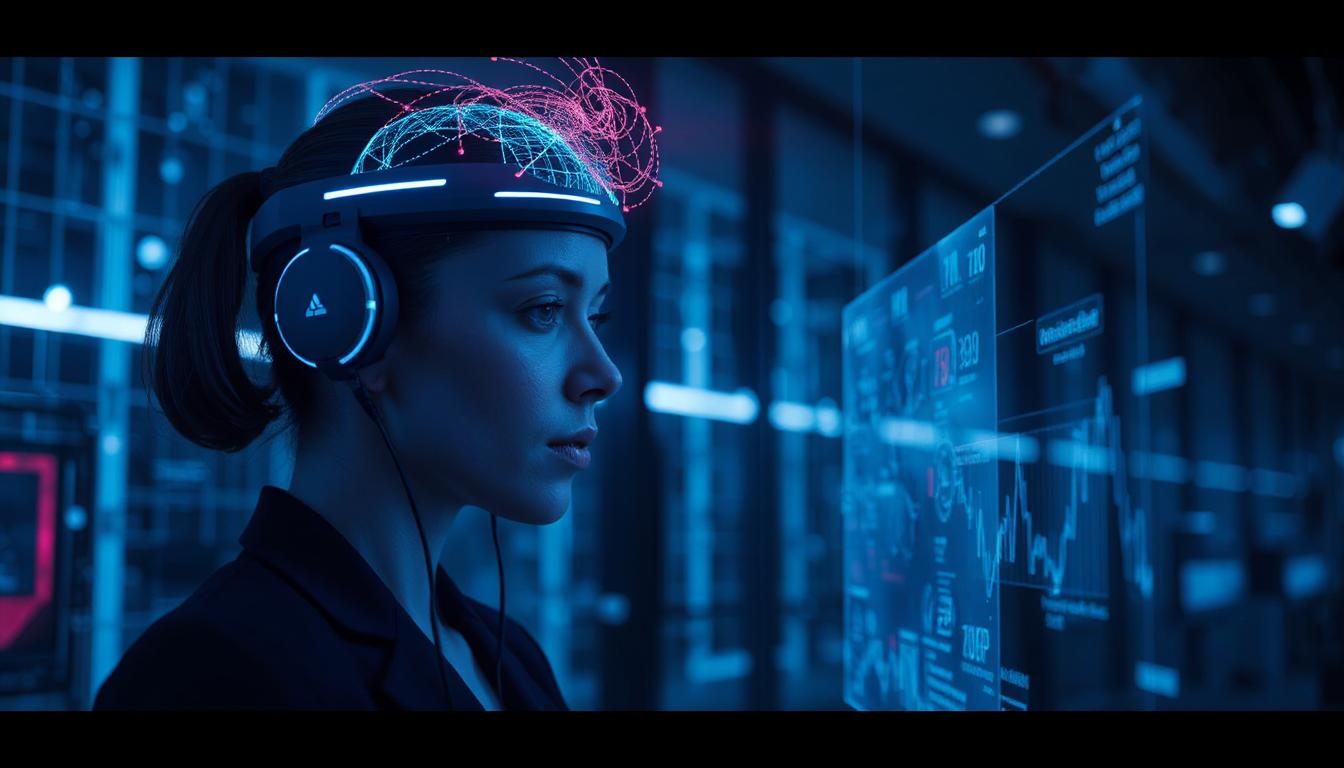
Brain-Computer Interfaces (BCIs) have long bridged the human mind and machines. While many early systems were invasive, recent breakthroughs in non-invasive BCIs powered by artificial intelligence (AI) are making them safer, more accessible, and far more scalable.
What Are Non-Invasive BCIs?
Non-invasive BCIs record brain activity without surgical implants, using external devices like EEG caps, fNIRS, or MEG. These signals are then decoded by AI models into commands for computers, prosthetics, or communication tools.
Why AI Matters
- Signal Clarity: AI filters brain noise for cleaner interpretation.
- Real-Time Processing: Deep learning enables smooth, instant responses.
- Personalization: AI adapts to each individual’s neural patterns over time.
Applications
- Healthcare: Communication aids for ALS patients, neurorehabilitation, prosthetics.
- Communication: Thought-to-text systems for speech-impaired users.
- Productivity: Hands-free computing for high-stakes environments.
- Gaming & Entertainment: Immersive, adaptive experiences based on brain states.
Current Limitations
Challenges remain: accuracy is lower than invasive systems, bulky headsets reduce comfort, and ethical concerns about mental privacy must be addressed.
Leading Non-Invasive AI-BCI Projects
Here are some of the most exciting active projects shaping this field:
- UCLA’s AI “Co-Pilot” BCI – Wearable EEG + camera-based AI system enabling robotic arm/cursor control. Also covered by Technology Networks.
- Neurable MW75 Neuro Headphones – EEG-enabled headphones using AI to track focus and brain health. Reviewed on Vox.
- Meta’s Brain2Qwerty – AI-driven brain-to-text decoding using EEG/MEG with promising results (ArXiv, Forbes).
- DARPA’s N³ Program – Non-invasive, bi-directional BCIs aimed at high-performance defense applications (IEEE Spectrum).
- CMU Focused Ultrasound BCI – Combines ultrasound + EEG for improved brain-to-text control (CMU News).
- CMU Finger-Level BCI – Real-time EEG-based robotic hand control at the individual finger level.
The Road Ahead
With major players from academia, industry, and government investing in AI-powered BCIs, the next decade may see wearable brain interfaces as common as smartwatches—transforming communication, healthcare, and human-computer interaction forever.
Conclusion
Non-invasive AI-powered brain-computer interfaces represent a profound step toward merging mind and machine—without surgery. With ongoing breakthroughs, we may be on the verge of a future where thought alone becomes the ultimate input device.